
- Forums
- Product Forums
- General Purpose MicrocontrollersGeneral Purpose Microcontrollers
- i.MX Forumsi.MX Forums
- QorIQ Processing PlatformsQorIQ Processing Platforms
- Identification and SecurityIdentification and Security
- Power ManagementPower Management
- Wireless ConnectivityWireless Connectivity
- RFID / NFCRFID / NFC
- Advanced AnalogAdvanced Analog
- Neural Processing UnitsNeural Processing Units
- MCX Microcontrollers
- S32G
- S32K
- S32V
- MPC5xxx
- Other NXP Products
- S12 / MagniV Microcontrollers
- Powertrain and Electrification Analog Drivers
- Sensors
- Vybrid Processors
- Digital Signal Controllers
- 8-bit Microcontrollers
- ColdFire/68K Microcontrollers and Processors
- PowerQUICC Processors
- OSBDM and TBDML
- S32M
- S32Z/E
-
- Solution Forums
- Software Forums
- MCUXpresso Software and ToolsMCUXpresso Software and Tools
- CodeWarriorCodeWarrior
- MQX Software SolutionsMQX Software Solutions
- Model-Based Design Toolbox (MBDT)Model-Based Design Toolbox (MBDT)
- FreeMASTER
- eIQ Machine Learning Software
- Embedded Software and Tools Clinic
- S32 SDK
- S32 Design Studio
- GUI Guider
- Zephyr Project
- Voice Technology
- Application Software Packs
- Secure Provisioning SDK (SPSDK)
- Processor Expert Software
- Generative AI & LLMs
-
- Topics
- Mobile Robotics - Drones and RoversMobile Robotics - Drones and Rovers
- NXP Training ContentNXP Training Content
- University ProgramsUniversity Programs
- Rapid IoT
- NXP Designs
- SafeAssure-Community
- OSS Security & Maintenance
- Using Our Community
-
- Cloud Lab Forums
-
- Knowledge Bases
- ARM Microcontrollers
- i.MX Processors
- Identification and Security
- Model-Based Design Toolbox (MBDT)
- QorIQ Processing Platforms
- S32 Automotive Processing Platform
- Wireless Connectivity
- CodeWarrior
- MCUXpresso Suite of Software and Tools
- MQX Software Solutions
- RFID / NFC
- Advanced Analog
- Neural Processing Units
-
- NXP Tech Blogs
- Home
- :
- 无线连接
- :
- Wireless MCU
- :
- Re: QN908x - SPIFI SDK example
QN908x - SPIFI SDK example

 gerardo_rodrigu
Hello Eugene,
There is no example in the QN908x SDK that uses the SPIFI interface. However, the SPIFI drivers (fsl_spifi.c/.h) are still available in "<SDK>\devices\QN908XC\drivers\". You could take as reference one of the SPIFI examples that are included in the LPC54018 SDK.
Please keep in mind that the on board SPI Flash (U15) is mapped to the Flexcomm2(SPI) pins and not to the SPIFI pins, so you would need an external memory to test the SPIFI module.
Regards,
Gerardo

Yes. At this moment when we redefine DATA field in the SPIFI_Type structure all things are worked (or you can define your own functions with predefined read data type). Please see my source code posted early.
gerardo_rodriguHello Eugene,
There is no example in the QN908x SDK that uses the SPIFI interface. However, the SPIFI drivers (fsl_spifi.c/.h) are still available in "<SDK>\devices\QN908XC\drivers\". You could take as reference one of the SPIFI examples that are included in the LPC54018 SDK.
Please keep in mind that the on board SPI Flash (U15) is mapped to the Flexcomm2(SPI) pins and not to the SPIFI pins, so you would need an external memory to test the SPIFI module.
Regards,
Gerardo
Good day Gerado Rodriguez.
Please clarify the situation with SPIFI hardware interface in QN9080 chip.
I have create the simple low leve driver that support serial Flash memory from Microchip SST26VF064B.
Lets's speak about the simple command 0x05 (Read JEDEC ID). This command use only opcode (0x05) and
after that, reads 3-bytes info (Manufacturer ID, Memory type, Chip ID) back.
SPIFI interface configured for use only four pins (kSPIFI_DualMode): SCK, CS, MISO, MOSI at:
MOSI: {pin_num: '21', peripheral: SPIFI0, signal: 'IO, 0', pin_signal: GPIOA24/ACMP0N/CS6/ETM_TRACEDAT0/CTIMER3_CAP0/RFE_RX_EN/FC3_SSEL1/SPIFI_IO0, pull_control: Pull_up, drive_strength: high}
MISO: {pin_num: '20', peripheral: SPIFI0, signal: 'IO, 1', pin_signal: GPIOA25/ACMP0P/CS7/ETM_TRACEDAT1/CTIMER3_CAP1/RFE_TX_EN/FC3_SSEL0/SPIFI_IO1, pull_control: Pull_up, drive_strength: high}
SCK: {pin_num: '25', peripheral: SPIFI0, signal: SCK, pin_signal: GPIOA20/QDEC1_A/SCT0_OUT1/CTIMER2_MAT0/SWO/FC1_RTS_SCL/SPIFI_CLK, pull_control: Pull_up, drive_strength: high}
CS: {pin_num: '17', peripheral: SPIFI0, signal: CSN, pin_signal: GPIOA28/CLK_AHB/ETM_TRACECLK/RTC_CAP/FC1_SCK/SD_DAC/SPIFI_CSN, pull_control: Pull_up, drive_strength: high}
The function that configures SPIFI as SPI in MODE0
/*-----------------------------------------------------------------------------------*/
int ext_flash_init()
{
// SPIFI configuration structure
spifi_config_t config = {0};
// Get default SPIFI configuration
SPIFI_GetDefaultConfig(&config);
// SPIFI uses only IO1:0 (MISO/MOSI)
config.dualMode = kSPIFI_DualMode;
// Disable prefetch
//config.disablePrefetch = true;
// Disable feedback clock
//config.isFeedbackClock = false;
// Initialize SPIFI
SPIFI_Init(SPIFI_PERIPHERAL, &config);
return 0;
}
The function that reads JEDEC ID:
/*-----------------------------------------------------------------------------------*/
/** Read JEDEC ID from external SPI memory
* JEDEC ID consists from 3 bytes:
* 1 - Manufacturer ID
* 2 - SPI Memory type
* 3 - CHIP ID
* \param[in] id Pointer to the 3-byte array where JEDEC ID stored
* \return '0' - for success operation, '-1' - error detected
*/
int ext_flash_Read_ID(unsigned char id[3])
{
unsigned int value;
// {dataLen, isPollMode, direction, intermediateBytes, format, type, opcode}
spifi_command_t read_jedec_id={4 , false, kSPIFI_DataInput, 0, kSPIFI_CommandAllSerial, kSPIFI_CommandOpcodeOnly, 0x9F};
// Check supplied pointer to the JEDEC ID 3-bytes answer
if (id == 0) {
return (-1);
}
// Reset the SPIFI for switch to the command mode
//SPIFI_ResetCommand(SPIFI_PERIPHERAL);
// Send JEDEC_ID command
SPIFI_SetCommand(SPIFI_PERIPHERAL, &read_jedec_id);
// Read 3-bytes answer from Flash
value = SPIFI_ReadData(SPIFI_PERIPHERAL);
// Reload Manufacturer ID
id[0] = (unsigned char) value;
// Reload Flash device Type
id[1] = (unsigned char) (value >> 8);
// Reload Flash device ID
id[2] = (unsigned char) (value >> 16);
return (0);
}
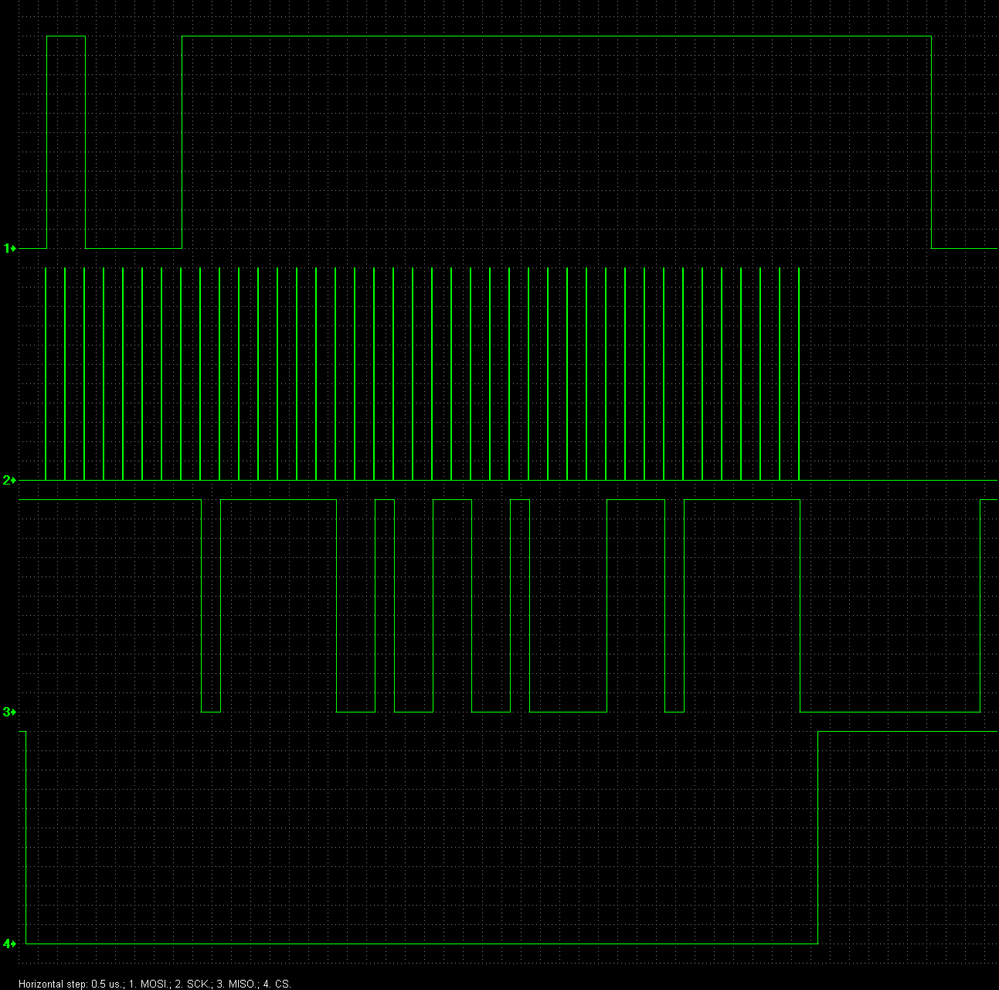
If I specify in the 'spifi_command_t' structure 'dataLen' field equal to 4 the function successfuly read JEDEC ID: 0xBF, 0x26, 0x43.
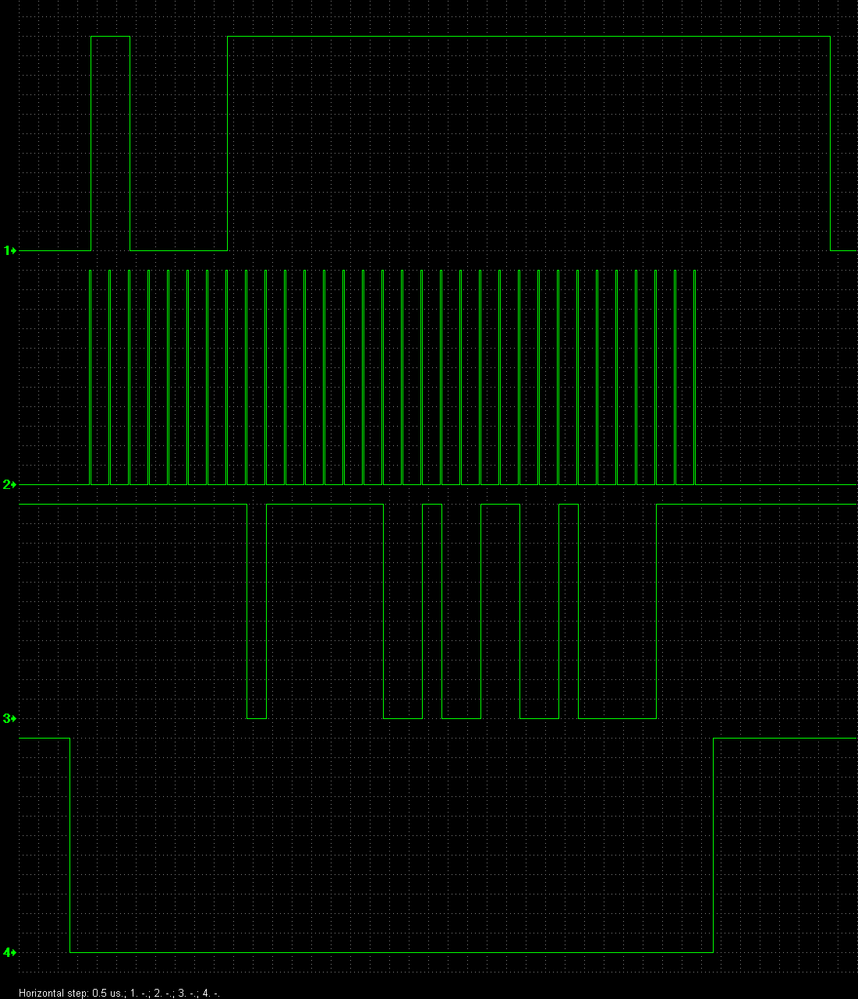
If I specify in the 'spifi_command_t' structure 'dataLen' field equal to 3 (as mentioned in SST26VF064B datasheet) after call SPIFI_ReadData function 'HardFault_Handler' is executed. But data is read from Flash memory as you can see at the attached picture (3-bytes answer during JEDEC ID Read).
As specified in the MCUXpresso SDK API Reference Manual_QN908x.pdf at page 392 in the description of the 'SPIFI_ReadData' function:
"Users should notice before call this function, the data length field in command register shall larger than 4, otherwise a hardfault will happen."
So the manual of the QN9080 chip is not correctly describe the "CMD - SPIFI command register".
As I understand DATALEN (13:0) must be multiple to 4 in order to avoid hardfault.
Please clarify this situation (how to avoid hardfault during SPIFI read not multiple to 4).
In the attachment, you can find diagrams of the SPIFI communication for reading JEDEC ID.
Read 4-bytes answer during JEDEC ID Read:
Read 3-bytes answer during JEDEC ID Read:
Recently I found the solution:
SPIFI_Type structure define DATA field as uint32_t. So, for fix this problem structure must be changed to new one, where DATA field must be defined as union:
union {
__IO uint8_t DATA8; /**< SPIFI 8 bit data */
__IO uint16_t DATA16; /**< SPIFI 16 bit data */
__IO uint32_t DATA; /**< SPIFI 32 bit data */
};
or use own function for read/write data from/to the SPIFI DATA register:
/** CPU SPIFI Peripheral base pointer */
#define SPIFI_PERIPHERAL SPIFI0
/*-----------------------------------------------------------------------------------*/
uint8_t SPIFI_ReadData8(SPIFI_Type *SPIFI_Base)
{
uint8_t *data8 = (uint8_t *) &(SPIFI_Base->DATA);
return *data8;
}
/*-----------------------------------------------------------------------------------*/
uint16_t SPIFI_ReadData16(SPIFI_Type *SPIFI_Base)
{
uint16_t *data16 = (uint16_t *) &(SPIFI_Base->DATA);
return *data16;
}
/*-----------------------------------------------------------------------------------*/
uint32_t SPIFI_ReadData32(SPIFI_Type *SPIFI_Base)
{
return SPIFI_Base->DATA;
}
/*-----------------------------------------------------------------------------------*/
int ext_flash_Read_ID(unsigned char id[3])
{
//unsigned int value;
// {dataLen, isPollMode, direction, intermediateBytes, format, type, opcode}
spifi_command_t read_jedec_id = {3 , false, kSPIFI_DataInput, 0, kSPIFI_CommandAllSerial, kSPIFI_CommandOpcodeOnly, 0x9F}; /*!< Read FLASH JEDEC ID (3 bytes: Manufacturer ID, Device Type, Device ID ) */
// Check supplied pointer to the JEDEC ID 3-bytes answer
if (id == 0) {
return (-1);
}
// Reset the SPIFI for switch to the command mode
//SPIFI_ResetCommand(SPIFI_PERIPHERAL);
// Send JEDEC_ID command
SPIFI_SetCommand(SPIFI_PERIPHERAL, &read_jedec_id);
// Read 3-bytes answer from Flash
// Reload Manufacturer ID
id[0] = SPIFI_ReadData8(SPIFI_PERIPHERAL);
// Reload Flash device Type
id[1] = SPIFI_ReadData8(SPIFI_PERIPHERAL);
// Reload Flash device ID
id[2] = SPIFI_ReadData8(SPIFI_PERIPHERAL);
return (0);
}
In this case hardfault does not arise and precaution mentioned in the document "SDK API Reference Manual_QN908x.pdf " are only words.
Hello, have you solved the problem at present?I
was experiencing a similar problem. When I read ID, the SPIFI clock cycle was incomplete, there was nothing in the DATA register, and the software jumped into the hardware exception code.
